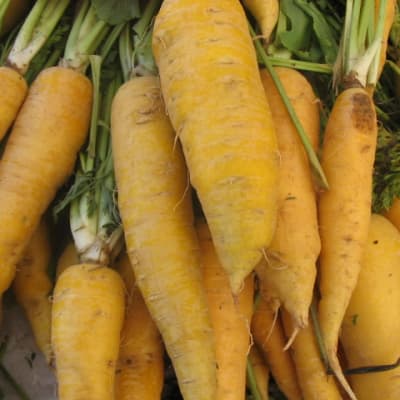
Beta vulgaris (54 days) Open pollinated. Gene pool based on 3 heirlooms. Expect 3 colors: pink-red with orange, bright gold and vivid orange. 3.5 x 7-8" tapered form.
Beta vulgaris (54 days) Open pollinated. Gold beet with Lutz shape, size and mild sweet flavor. Green tops with some golden stem. Golden orange roots with orange shoulders.
Brassica oleracea (botrytis group) (95 days) Open pollinated. Handsome uniform dark-green 5-6" heads. Abundant side shoots over a long harvest window. Ideal home-garden variety for the fall.
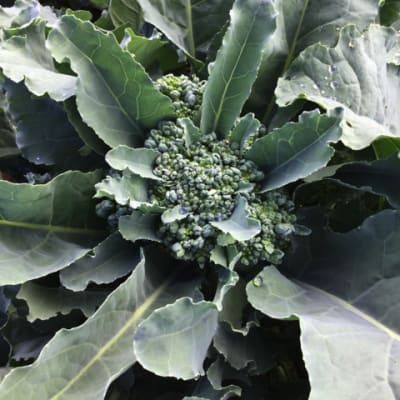
Brassica oleracea (botrytis group) (56 days) Open pollinated. Sweet stalks and stems produce succulent small green loose heads with very large beads. Abundant side shoots. Excellent flavor and heat tolerance.
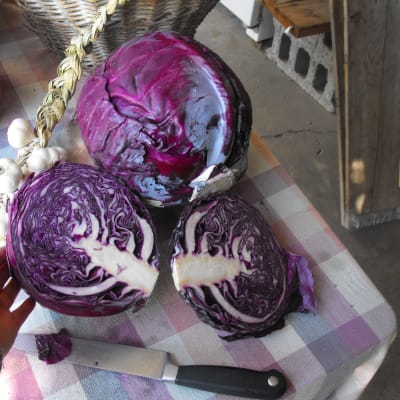
Brassica oleracea (capitata group) (105 days) Open pollinated. Compact deep-burgundy red heads are excellent raw, cooked or fermented. In good storage they'll keep till March.
Daucus carota (55 days) Open pollinated. Early coreless translucent pinkish-orange blunt-tip roots. Mild sweetness boosted by “carrot perfume.” Upright tops good for bunching.
Daucus carota (68 days) Open pollinated. Uniform cylindrical 7" roots with unusually good interior color, crisp texture and fine flavor. Holds well; an excellent keeper too.
Daucus carota (85 days) Open pollinated. A stalwart storage carrot whose flavor improves with time. Also good for fresh eating and juicing. 7–9" heavy cylindrical roots.
Apium graveolens (80 days) Open pollinated. Thick crisp stalks have rich flavor, not harsh even in less-than-ideal conditions. Ventura must receive adequate, even moisture for best growth.
Apium graveolens var. rapaceum (100 days) Open pollinated. A classy early celeriac, high yielding with relatively smooth roots, uniform white internal color and splendiferous eating quality.
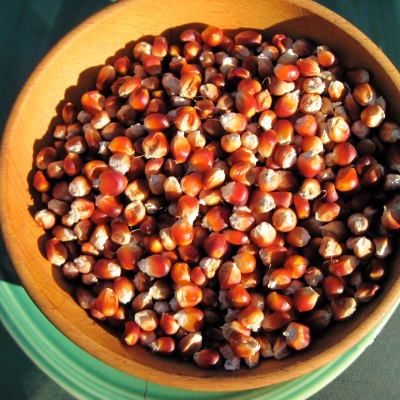
Zea mays var. rostrato (100 days) Open pollinated. Beautiful red pointy kernels are easy to shell and grind. Rich sweet corn flavor good for flour or polenta.
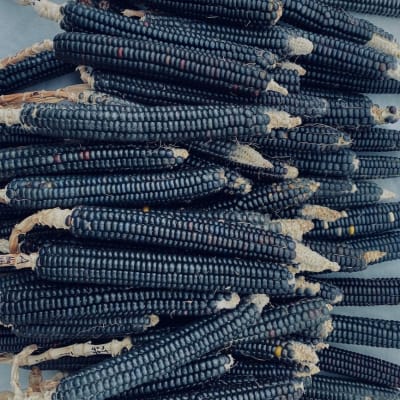
Zea mays (95 days) Open pollinated. A nutrient-dense grain that is fast maturing under harsh conditions, and stands strong for machine harvest. The soft starch makes fluffy cornbread and also binds well for Johnnycakes and tortillas.
Zea mays (85 days) Open pollinated. This superior flour corn boasts hardiness, earliness and vigor. Ears are solid-colored and can be sorted for use based on kernel color: Pancake White, Parching Red, Parching Starburst and Brown Gravy.
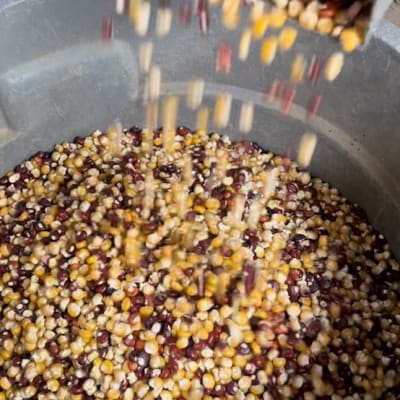
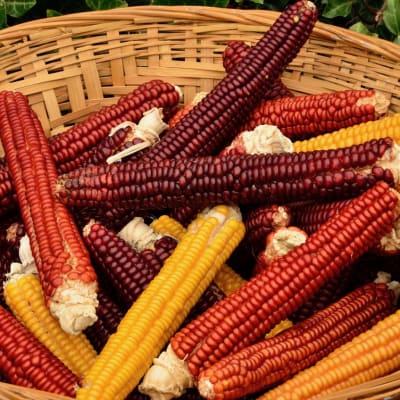
Zea mays (105 days) Open pollinated. 5-8" ears. Kernels are mostly red, yellow, mottled rosy-brown (also brown, purple, blue and white), and larger than most popcorns.
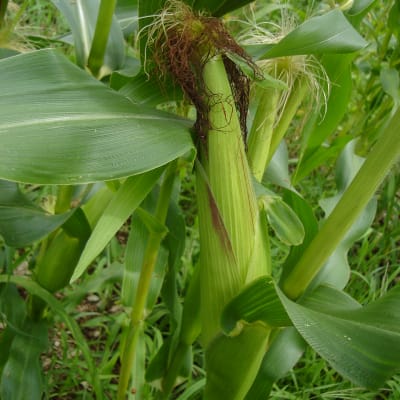
Zea mays (72 days) Open pollinated. Bred by Fred Ashworth. 5' stalks, 6-7" yellow ears, good flavor. Harvest at milk stage; does not hold in the field. Starts well in cool soil.
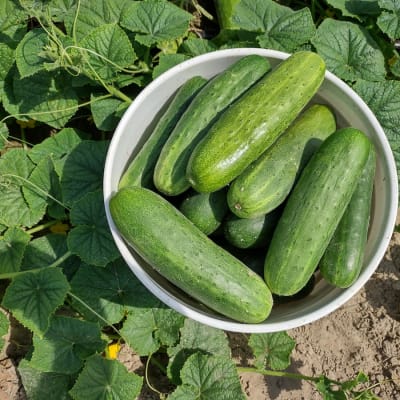
Cucumis sativus (54 days) Open pollinated. Smooth thin-skinned fruits are juicy, refreshingly cool, enjoyably mild and almost completely free of the bitterness common in American slicers.
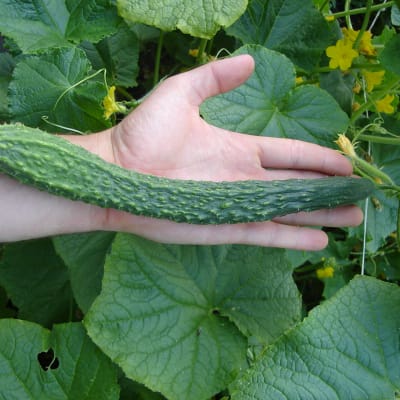
Cucumis sativus (62 days) Open pollinated. Extra-long Asian slicer. Uniform slender smooth-skinned 9-12" fruit with crisp non-bitter flesh. Excellent flavor.
Cucumis sativus (60 days) Open pollinated. Parthenocarpic pickler. Blocky, smaller than average fruit. Compact growth and small leaves. Can be grown under row cover.
Cucumis sativus (58 days) Open pollinated. Slicer from the same line as Marketmore 76. Fruit is slimmer and darker, with improved yield and disease resistance.
Solanum melongena (88 days) Open pollinated. Italian heirloom. White with lavender streaking, plump, 3-4" wide by 5" long. Fruits avg 2 lb. Creamy, delicate, great for gourmet markets.
Solanum melongena (84 days) Open pollinated. Pink-lavender with white shoulders, pear-shaped, 4-6" wide by 6-8" long. Sweet tender white flesh. Early and productive.
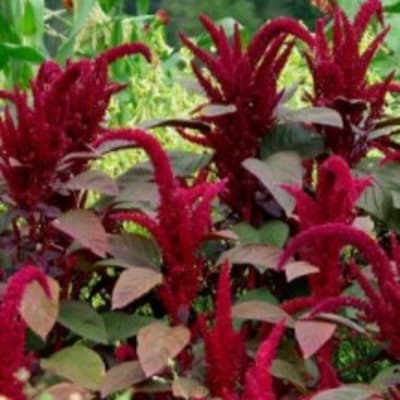
Amaranthus hybridus (65 days to flower, 125 days to seed) Open pollinated. Is it a green vegetable? An ornamental? A gluten-free grain? Why, yes! No wonder Amaranth was sacred in pre-Columbian Mexico.
Hordeum vulgare Open pollinated. An historic 6-rowed barley selected by Luther Burbank from California hulless barley. In his final seed catalog he called it “one of [his] greatest grain creations.”
Avena nuda (100 days) Open pollinated. Grain that’s easier to thresh than most other oats, though it still has a small hull that must be removed. A good variety to re-introduce growing grain on home ground.