Aronia arbutifolia 6-8' x 3-4'. Upright multi-stemmed form with dense clusters of small white flowers. Abundant persistent bright red fruit. Brilliant fall foliage. Z3/4.
Vaccinium vitis-idaea 12-18". Very adaptable with large berries. Somewhat lower yielding but standard in commercial production as a great pollinator. May bloom twice a season. Z2.
Prunus mandshurica Extremely hardy drought-resistant tree native to northeast China, far east Russia and Korea. Useful in breeding new frost-resistant varieties. Fruit is of variable eating quality. Z3.
Ceanothus americanus Small compact shrub fixes nitrogen and attracts pollinators. Leaves historically used as tea and medicine. Grows in poor soils. Native to N. America. Z4.
Castanea crenata Vigorous, precocious and high yielding. Can cross-pollinate with Chinese, American and hybrid chestnuts. Moderate to high blight resistance. Z4.
Prunus spp Midsummer. One of the most widely grown Japanese plums in Japan and Korea. Large oblong fruit ripens to a majestic fuchsia, with sweet-tart golden flesh. Clingstone. Z4.
Viburnum dentatum 8-15' x 4-10'. Vase-shaped native shrub traditionally used for making arrow shafts. Small blue-black fruits loved by birds. Adaptable. Forms colonies, makes a great hedge plant. Z2/3.
Prunus armeniaca Heirloom English variety now standard in the U.S. Orange fruit speckled with red is sweet, aromatic and firm yet juicy. Great for fresh eating, canning and drying. Z5.
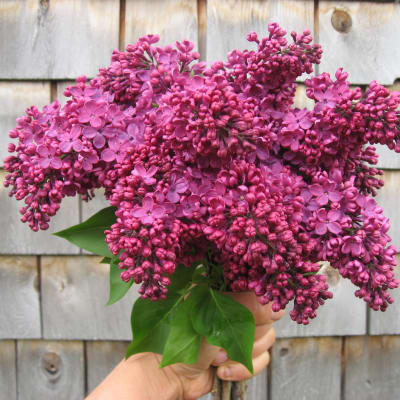
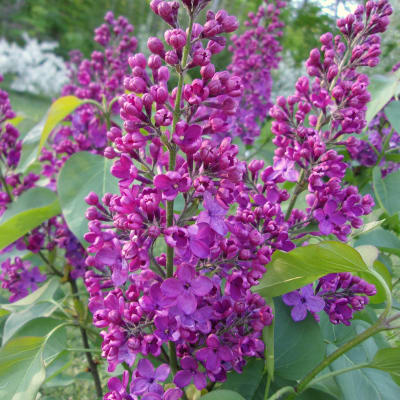
Syringa vulgaris 8x8'. Among the deepest and darkest purple flowers of all lilacs. One of the best in cultivation. Large clusters of very fragrant large single florets. Provides stunning contrast with others. Z3.
Hydrangea quercifolia 4-6' x 6-8' Spreading multi-stemmed shrub with oak-like leaves and spiked white flowers. Dried flowers turn pink to bronze. Cultivar selected for strong flower stems that won't flop over. Z5.
Syringa vulgaris 10' x same. Very fragrant large single reddish-purple blooms, with each petal edged in pure white. Unique and beautiful! Upright rounded open form. Z3.
Syringa vulgaris 10' x same. Smallish clusters of exceptionally fragrant single light lavender-blue blooms. Blooms early and quits late. Can spread to form a massive shrub. Z3.
Syringa vulgaris 12x12'. Very fragrant large pure white double flowers in thick clusters. Slightly open wide-growing shrub. Beautiful accent for pinks and purples. Z3.
Malus 20 × 20'. Deep pink buds and deel clear red-pink single flowers. Birds will love the abundant persistent fruit! Excellent disease resistance. Z4.
Salix purpurea ‘Nana’ 3-5' x 3-6'. Medium-sized spreading shrub with small narrow blue leaves and delicate thin long stems. Excellent bank or hedge plant. Attractive ornamental. Z3.
Salix gracilistyla ‘Melanostachys’ 6-10' x same. Very attractive fast-growing plant with deep purple-black male catkins in early spring. Stems turn rich purple-black in winter. Z4.
Halesia carolina 20-40' × 15-30'. Small tree or large multi-stemmed shrub. Edible flowers and fruit. Beautiful addition to woodland gardens! Native to Appalachia. Z4.
Cornus racemosa 3-8' x 10-15'. Native multi-stemmed thickly branched suckering shrub with rounded domes of small 4-petaled white flowers that bloom in early summer. White berries on bright red fruit stalks. Z4.
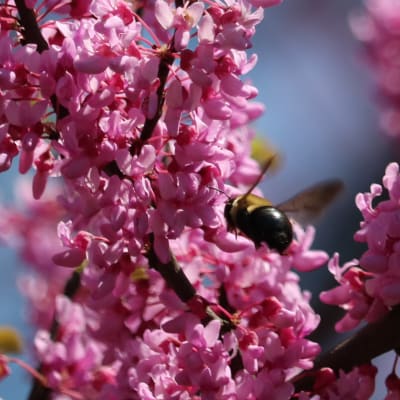
Cercis canadensis 25-30' × same. Small vase-shaped ornamental tree. Clusters of brilliant edible purplish-pink pea-like flowers fill the entire tree in spring. Z4/5.
Ulmus americana 60' x 35-40'. New selection from a lone survivor wild specimen surrounded by other trees that had succumbed to the fatal disease. Further studies at U Minn confirmed its excellent resistance. Z3.
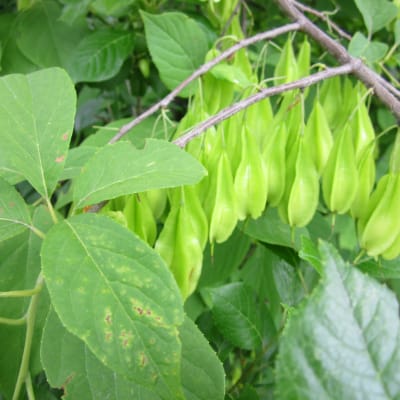
Ostrya virginiana 20-40' x 15-20'. Small native upland understory tree is tougher than nails. Shaggy bark. Seeds mature in papery cones resembling hops. Z3.
Castanea pumila 15-30' x 10-20'. Once an important food for indigenous peoples. Somewhat resistant to chestnut blight. Native to much of central/eastern U.S. Z4.
Prunus armeniaca Mid-late summer. From Iran, these apricots are sugary with large sweet edible almond-like pits. Very hardy and worth trialing in the Northeast. Z3.
Prunus × dasycarpa Cross between apricot and myrobalan plum. Rare. Makes flavorful dried fruit that rivals dried mango. Tangy, sweet, satisfying. Z6; worth trialing in Z4/5.
Prunus armeniaca Midsummer. One of the best-tasting of the Harrow series of hardy apricots, but not quite as cold tolerant as others. Drips with sweet juice. Z4/5.
Prunus nigra Late summer. Yellow flesh is sweet and juicy, good for eating right off the tree, in jams, chutney, tarts or infused in vodka! Tree is upright, spreading and a prolific annual bearer. Very cold hardy. Z3.
Prunus cerasus × P avium Midsummer. Hardy good-quality sweet cherry with juicy medium-firm black flesh. Self-pollinating, and will pollinate other sweet cherries. Z4/5.
Pyrus communis Fall. Bittersweet perry pear. Heirloom Swiss variety. Presses into a very astringent juice, perfect for blending with sweeter varieties to make a balanced perry. Z4.
Malus spp. Lovely in purply-pink bloom, but especially prized for its fabulous foliage. Reddish leaves turn to glossy purplish-green, fading to all purple in fall. Z3.
Malus spp. Red buds open to red-tinged white textured single blooms. An excellent crab for persistent fruit and disease resistance. Very distinctive upright form. Z4.