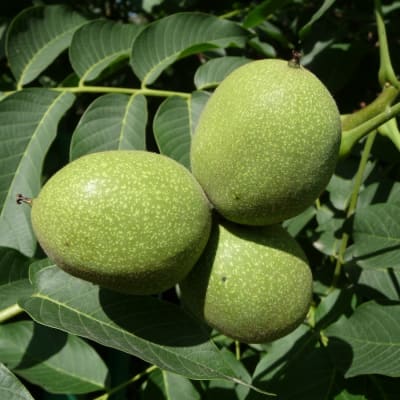
Castanea pumila 15-30' x 10-20'. Once an important food for indigenous peoples. Somewhat resistant to chestnut blight. Native to much of central/eastern U.S. Z4.
Corylus americana 12-18' x 10-15'. Multi-stemmed native shrub with sweet nuts. Showy catkins in spring. Patchwork of colors in autumn. Can bear in 3-5 years. Z4.
Corylus spp. 8-12' × same. Hybrid crosses of mixed parentage, including European hazelnut. Nuts will likely be larger than those from other seedlings. Highly resistant or immune to filbert blight. Z3.
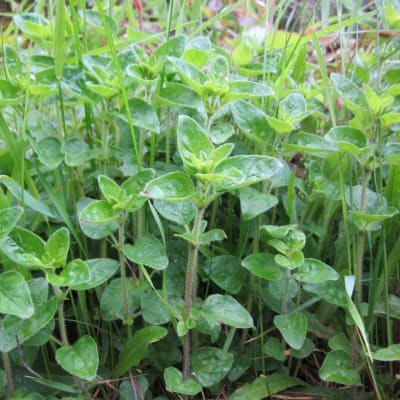
Origanum vulgare 18-20" tall. Fragrant green and purple leaves used for culinary purposes. Given plenty space in full sun, it sprawls and is attractive to pollinators. Z4.
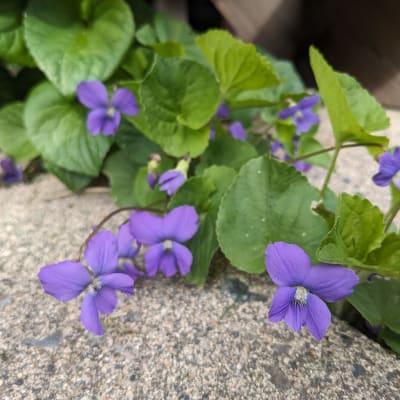
Viola sororia 6-10" tall. North American native with cheery blue-purple flowers and attractive heart-shaped leaves, all edible. Larval host plant for multiple species of butterflies. Z3.
Cornus mas 20-25' x 15-20'. Bright red pear-shaped edible fruit. Each seedling will be unique. Will pollinate each other and any named cornelian cherry cultivar. Z4/5.
Vaccinium macrocarpon Albino berries with red blush. Selected from a seedling found growing in a bog on an island off the coast of Maine. Lasts up to 6 months in cold storage. Z2.
Vaccinium macrocarpon 4-10". The cranberry of holiday sauces, bread and jelly. Dense low lustrous evergreen groundcover loaded with large red berries in fall. Z2.
Gaylussacia baccata 1-3' x 2-4'. Cousin of the blueberry. Less acidic, more mildly sweet flavor. Flowers in June, fruits in August. Full sun to part shade but fruits best in sun. Native to eastern U.S. and Canada. Z3/4.
Prunus tomentosa 6-10' x same. Broad dense highly ornamental fruiting shrub blooms early. Excellent hedge and edible landscape plant. Plant two or more for pollination. Z2.
Calycanthus floridus 6-10' x 6-12'. Beautiful native shrub with dark burgundy-maroon flowers and shiny leaves. Blooms early, flowers through summer. Highly fragrant. Z4/5.
Prunus maritima 6' × 5-6'. Rounded dense suckering shrub found along ocean beaches. Showy white blooms in spring. Edible plums in late summer. Plant two for fruit. Z3.
Arctostaphylos uva-ursi 6-10". Low-growing evergreen groundcover. Can sprawl to 15'. Pinkish-white flowers in spring. Small red berries persist into winter. Self-pollinating. Z2.
Rubus odoratus 3-6' x 6-12' Relative of the cultivated raspberry, with fragrant flowers and nutritious fruit. Thornless, long-blooming, attractive to pollinators. Excellent addition to wildlife hedges. Z4.
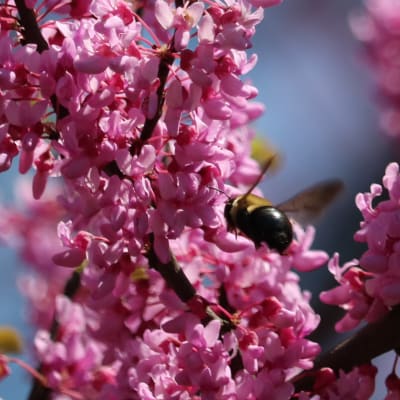
Cercis canadensis 25-30' × same. Small vase-shaped ornamental tree. Clusters of brilliant edible purplish-pink pea-like flowers fill the entire tree in spring. Z4/5.
Amelanchier laevis 15-25'. Leaves of this understory tree unfold purplish-orange bronzed color in spring. Pendulous white blossoms. Berries ripen midsummer. Z2.
Lindera benzoin 6-12' x 8-12'. Large rounded multi-stemmed fragrant native shrub suited to moist or wet areas. Soft-yellow flowers. Glossy red edible berries. Z5.
Gaultheria procumbens 6-10". Aromatic evergreen native groundcover. Glossy dark green leaves. Bell-shaped white flowers in June. Vivid red berries. Self-pollinating. Z3.
Diospyros virginiana 35-60' x 20-35'. Medium-sized native tree produces edible orange fruit used in pies, jams and jelly. May not always ripen north of Boston. Plant two or more for fruit. Z4/5.
Cydonia oblonga 10-25'. Hardy Russian quince bred for disease resistance. For jellies and cider, stews and marmalades. Citrusy, fragrant with an orangey-pink hue. Z4/5.
Cydonia oblonga 10-25'. Large smooth light golden-yellow fruit with tart white flesh. Good for fresh eating, wine and pineapple-flavored jelly. Late bloomer ripens in late summer. Z4.
Cydonia oblonga 10-25'. Oblong furrowed pear-shaped fruit with golden-yellow skin and mild light yellow flesh. Pink flowers. Good keeper. Ripens late summer to early fall. Z4/5.
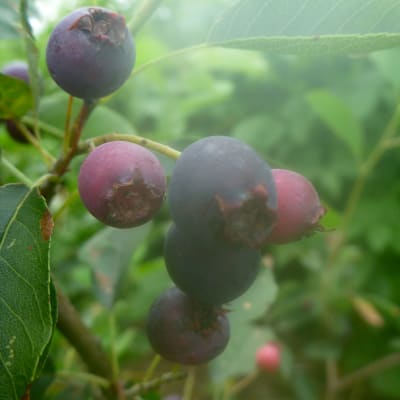
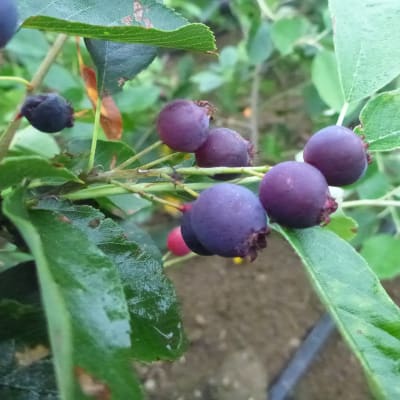
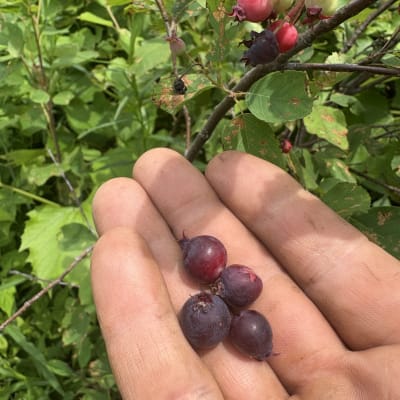
Amelanchier stolonifera 3-5' x same. Berries are small but very flavorful—perfect combo of sweet and tangy. Would do well in a rock garden, hedge or thicket. Native. Z4.
Amelanchier stolonifera × A. alnifolia 5-8' x 5'. Medium-large berries are mildly sweet with no trace of acid. Hefty fruits are proving crack-resistant. Very uniform ripening pattern. Z3.
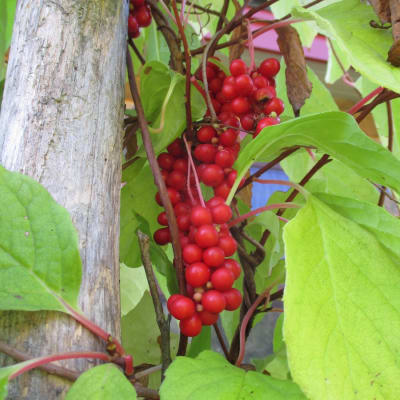
Schisandra chinensis 20' or taller. Ornamental vines produce flavorful medicinal berries. Adaptogenic fruit used to build the immune system and rejuvenate the body. Z4.
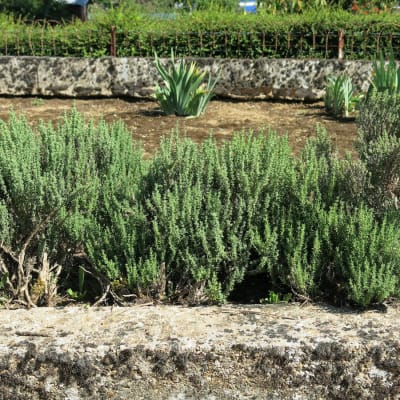
Thymus vulgaris 10-15" tall. Fragrant sprawling perennial brings depth of flavor to soups, gravies, casseroles. Said to calm the nerves, soothe headaches. Bees love it! Z4.
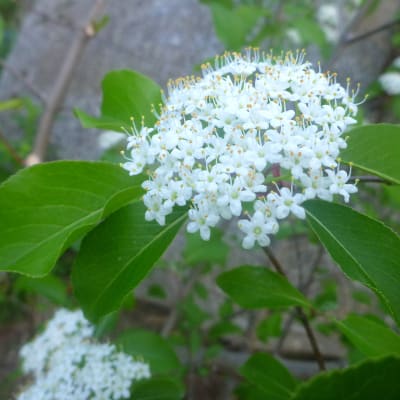
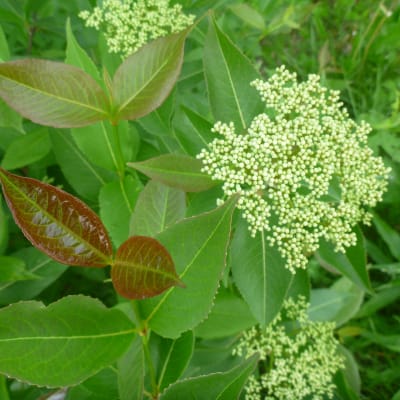
Viburnum prunifolium 12-15' x 8-12'. Rounded shrub with creamy white cymes in early spring. Suckering habit, but can be pruned. Bluish-black edible fruit clusters in fall. Z3.
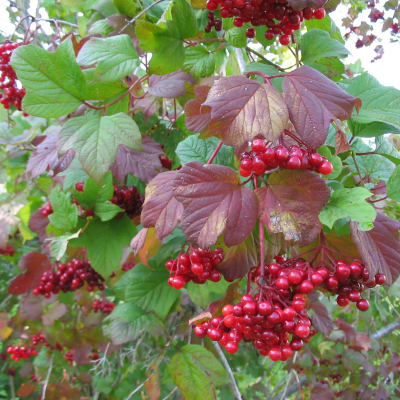
Viburnum opulus var. americanum 8–12' × same. Also known as Crampbark. Medicinal multi-stemmed native shrub. Add to the biological diversity of your garden. No two seedlings are exactly alike. Z2.
Viburnum cassinoides 5-6' × same. Dense suckering native shrub. White flowers from spring to early summer. Edible black fruit. Plant more than one for fruit. Z3.